Benefits of Grazia's website include:
The Readers
-Easier access to the readers
-Previewing the contents of their next issue
-Free video access (fashion in paricular)
-More interactive for the consumers
The Magazine itself
- Mass audience
-Innovative
-Image of magazine reflects towards audience
- Increased advertising revenues
-Increased brand readership and loyalty
Possible Threats
- The rise of online fashion blogs-daily, not weekly, free, niche etc.
- Decrease in sale as less people purchase the actual magazines.
Wednesday, 5 March 2014

Friday, 28 February 2014
Filming Schedule
Film
Opening Schedule
Dates
|
Location
|
Scenes
|
7th
of December, 2013
|
Mad Harry’s Fancy Dress and Party Shop
Streets of Portishead, UK
Forest area near Portishead.
Volunteer Actor’s home in Portishead.
|
-A long shot outside at the front of Mad Harry’s Fancy Dress and
Party Shop, Paranoid Man enters building. One long shot, a two-person shot,
one close-up and one over the shoulder shot where the Paranoid Man sees The
Man in Yellow
-One long shot of the Paranoid Man running to the bus stop, a
close-up shot, and a two person shot of the Man in Yellow and the Paranoid
Man running away.
Camera shot Ped down, showing the legs of the Paranoid Man
fleeing as the Man in Yellow follows
-Long
shot of the Paranoid Man that turns 180 degrees angles from right to left
revealing to the background the Man in Yellow
-A long shot outside at the front of the home, Paranoid Man
enters building. Close-up shot of coffee mug, medium/long shot behind
Paranoid Man as he browses through the computer. A medium shot of the Paranoid
Man turning around, camera zooms in twice at the door and the Paranoid Man in
fear; close-up of hand taking knife.
|
11th
of January,2014
|
Forest area near Portishead
|
-Long shot of Paranoid Man hiding, as he looks up the camera
must be as a POV shot of the man looking up, reverts back into a long shot as
the Paranoid Man runs off, the Man in Yellow is hidden within the background.
|
Wednesday, 26 February 2014
Film Opening - Planning (Redo)
Film Opening - Planning (Redo) and Log
Because of multiple problems from poor time management to over-ambitious goals, the narrative and planning of this short film opening has been changed drastically. The film being created is now called "The Man in Yellow"; this narrative is about a paranoid man who believes he is being followed by a man in a yellow coat around his local town.The Paranoid Man is running and hiding from this ominous force, however I aimed to make this 'man in yellow' as a force that the audience are not sure that really exists; perhaps the 'man in yellow' is a paranoid delusion, a coincidence, or a real threat. As the film reaches to the end, the paranoid man is in the comfort of his home, only to realise that an unwanted guest is knocking on the door (presumably the Man in Yellow depending on the audience's imagination); the paranoid man panics and prepares himself by taking up a knife as the opening fades to black.
The opening was filmed in the 7th of December, 2013 in Portishead, Bristol, UK ; locations used for filming include the streets of Portishead, the woods around the area, a costume shop named "Mad Harrys", and a home from one of the volunteer actors. The one responsible for using the camera will be myself and the editing will be done by my partner and I. The person playing as The Paranoid Man is my partner and the volunteer playing as The Man in Yellow is a friend of my partner. The only notable props/costumes in this short-film would be the volunteer actor's yellow coat which uses a bright cheerful colour and associate it with a seemingly threatening force and the kitchen knife at the final scene of the film which represents the dark and villainous traits within the protagonist.
The footage filmed on the 7th of December 2013 requires improvements, therefore we are going to be filming again in the January to February Term on the 11th of January 2014 due to school rules not permitting the use of their equipment during half-term. Luckily, before half-term arrived my partner and I have managed to do most of the editing in the footage we can use for this project.
The opening was filmed in the 7th of December, 2013 in Portishead, Bristol, UK ; locations used for filming include the streets of Portishead, the woods around the area, a costume shop named "Mad Harrys", and a home from one of the volunteer actors. The one responsible for using the camera will be myself and the editing will be done by my partner and I. The person playing as The Paranoid Man is my partner and the volunteer playing as The Man in Yellow is a friend of my partner. The only notable props/costumes in this short-film would be the volunteer actor's yellow coat which uses a bright cheerful colour and associate it with a seemingly threatening force and the kitchen knife at the final scene of the film which represents the dark and villainous traits within the protagonist.
The footage filmed on the 7th of December 2013 requires improvements, therefore we are going to be filming again in the January to February Term on the 11th of January 2014 due to school rules not permitting the use of their equipment during half-term. Luckily, before half-term arrived my partner and I have managed to do most of the editing in the footage we can use for this project.
Film Opening Planning - New Storyboard
Film Opening Planning - New Storyboard

Film opens with an establishing shot of Portishead as our protagonist the Paranoid Man enters a costume shop, match on action is used in the second shot as the character continues to walk into the shop in a camera long shot. In the third shot, the camera is now 180 degrees at the Protagonist's right side browsing through the shop as a Man in Yellow watches. The fourth shot is a close-up shot of the Paranoid Man being startled only to find that no one is there. The fifth shot depicts the Paranoid Man running to the bus stop, this is the shot when the unsettling non diegetic music is begins playing; the sixth shot shows The Paranoid Man sitting next to a person in a yellow coat, he assumes that he is the Man in Yellow and runs off.

The seventh shot is the protagonist cowering and grasping the gate behind him and running off, the camera then zooms to the Man in Yellow sitting far beyond the gate. The 8th shot is a low angle shot showing the feet of the Paranoid Man running as the Man in Yellow follows him in a calm pace; the 9th shot is now in a forest area as the protagonist hides near a fallen tree, as he looks ups the tenth camera shot is a POV shot of the Paranoid man's perspective looking up to the sky. The eleventh shot is a long shot of the Paranoid Man running off to the distance, it was recommended by my partner to carefully place the Man in Yellow hidden within the background, the 12th shot depicts the Paranoid Man entering his home.

The 13th shot is a close up of a coffee mug positioned as the centre of attention , this camera shot has been noted as the moment where the Paranoid Man has actually stopped running from which further shows in the 14th shot of the Paranoid Man who is now slightly calm. The 15th shot hints a slight, paranoid clue to who or what the Man in Yellow is; the 16th shot shows the Paranoid Man turning suddenly to his back as someone knocks from the other side of the door, let it be noted that the non-diegetic sound stops when the knocking begins. The 17th shot zooms in to the door in order to emphasise the tension in the scene; the final shot is a close-up shot of the Paranoid Man taking a knife, preparing to attack what lies behind the door.
Wednesday, 12 February 2014
Film Opening Planning-Storyboard


Storyboards were made in the planning of this short-film opening; their is the possibility of embedding opening credits within the shots. Shot one starts off with a haiku that reflects on the narrative and the protagonist of this film. The second shot establishes the setting of this film and crabs right to our protagonist in a medium shot; the third shot is a close-up of our protagonist contemplating as he looks up to the sky the camera cuts to a sky shot, revealing that it is actually a POV shot as The Artist reaches his hand out to the sky. The fifth shot is a quick, erratic montage of images such as Rorschach ink blots, paintings, and/or text accompanied by the sound of screaming which represents The Artist's growing madness; the sixth shot cuts back to a sky shot that isn't a POV which shows as the camera tilts down as a tracking wide shot of our protagonist.

The seventh shot begins as a medium shot behind The Artist, a 180 degree angle turn to his left will zoom in on the character's face which looks up. The action matches on in the eighth shot as a worm's eye view of the character looking at a Church. The ninth shot jumps back to The Artist's close-up, but it is no longer outside but in a different location and he is wearing different clothes. The camera tracks out showing a medium shot of the character and his audience as he unveils his latest work; the eleventh shot is a close-up of an ignorant, unappreciative audience which that become frustrated, The Three Critics are amongst the audience. The twelfth shot is The Artist being attacked by the audience, consisting of match-on action as fists and blows to the head strike our protagonist.


The 19th, 20th, and 21st shots consist of a long view of the tarnished room , The Artist walks to the center fixing the room and gathering his materials. A medium close-up of our protagonist which also shows The Muse in the background, the shot rotates 180 degrees to the left and zooms in, becoming a close-up at the back of The Artist. It soon reveals that the close-up is a POV as a hand reaches out on the left shoulder of The Artist and a blade is in a right hand; the Muse forces down The Artist to the ground. The 22nd shot id a tilted medium shot of The Artist struggling as The Muse forces to plunge the blade into him. Shot 23 is an extreme close-up shot The Artist's eye in sorrow and joy; the 24th shot is the Title.

The 25th shot follows the knife being tossed aside; the 180 degree rule is then followed in the 26th, 27th, and 28th shots. The 26th shot is a long shot that shows the Artist and a stranger, reality is back in order; dialogue is established as stranger asks if the Artist is well which continues in the 27th and 28th shot. Over the shoulder shots were used in shots 27 and 28, however shot 27 is a low angle over the shoulder shot while shot 28 is a high angle over the shoulder shot. A very high angle shot is used in shot 29 as the two characters leave, camera then jump cuts to an over the shoulder shot that is zooming away from The Muse slowly as she watches them from above, film ends with flashing images and text.
Sunday, 24 November 2013
Film Opening- Planning
Film Opening- Planning
The narrative of the film opening my partner and I are creating revolves on the suffering of an unappreciated artist who is degraded and harassed by those outside his surroundings. In the middle of the film after the artist displays his work he is mocked and attacked by three critics and the audience, leaving him in despair and going on their merry way. As the opening continues, it becomes apparent that the artist is not only tormented by the cruel reality he is part of but also an illusion, a being from the reality of his own head that once represented his love for art, now an entity that despises him for failing her known as the muse. As he gathers what little fortitude he has left, the muse pins him down, ready to stab and slice away. Only the illusion vanishes and reality sets back in revealing that the stranger above him isn't trying to kill him, but rather save the artist from committing suicide. The opening ends with the two walking out and the illusion still lurking in the dark.
The setting and filming locations will take place in Portishead, Bristol, UK such as the church at the end of Nore Road and a drama room located in Gordano School. The time of filming for the Unveiling and Hallucination scenes will be in the drama room(s) of Gordano School on the 4th of December 2013.
Characters for this film include The Artist, our protagonist who suffers for his work and the torment placed upon him by those around him and the festering madness in his mind, slowly becoming a danger to himself; a suit and paint stains on our actor will go good, possibly some make-up to make him appear sleep-depraved and miserable. The Muse: the antagonist and a product of The Artist's madness, a once beautiful representation of the Artist's work and ambition now distorted into a sinister foe due to his countless failures, now the illusion desires the demise of the Artist for ruining her. For this character, we must consider the style of the costume, possibly similar to that of the Ancient Greek myth of The Muses, colours must be considered when applying make-up to the actress and the possibility of having her face concealed. The Three Critics: inspired by the idea of the Three Stooges, differences would be that these three dispense violence towards the protagonist, these three must be wearing suits and faces concealed by masks; the Audience members will be wearing their casual middle-class clothing.
Props must also be gathered such as chairs for the Unveiling scene, masks must be gathered, prop weapons for The Three Critics must be chosen, a prop knife for The Muse must be made or purchased; there is also the problem of The Muse's costume, due to the location of the drama room, we must respect the wishes of the anonymous person who has lent us the room and use crumpled balls of paper ( and possibly other props) to throw at The Artist rather than fresh tomatoes; paintbrushes and a canvas of a bizarre, abstract art piece.
Camera work and editing will mostly be done by my partner. Rorschach inkblots and bizarre art pieces have been made and will be edited in the opening as flash, split-seconds to imitate hallucinations and The Artist's growing inability to distinguish reality from his crumbling mind. Some sound effects may need to be added such as the assault on the Artist or the distorted screaming sounds that will be added; the background music is yet to be decided however it's use must be contrapuntal. The candidate pieces of music include: "Crazy"(1961) by Patsy Cline, an extract from Beethoven's "9th Symphony, 4th Movement"; an extract of Bach's "Jesus bleibet meine Freunde", an extract from Bach's "Air on G String", Verdi's "Anvil Chorus", "Cold, Cold Heart"(1951) by Tony Bennett, or an extract from Tchaikovsky's "Waltz of the Flowers".
The title of the film is: "An Artist's Suffering", a haiku will first be displayed that revolves on the narrative of the opening; like most opening sequences the title will first be displayed than a list of the actors and actresses, than the names of those involved with the creation and development of the film which will all be embedded within the sequence of the opening.
Monday, 18 November 2013
Film Opening Research- Title
Film Opening Research-Title
Title: the given name of a book, composition, art piece, or any other form of work.
There is nothing more important in a film, television series, or any other media texts/products than its' title. It gives the media product an identity, a name their audience can know and appreciate; a title that connects with the genre and the contents of its' narrative. Most of the time a title sequence would be displayed at the opening of a film alongside the opening credits that introduce a portion of the key production and cast members that made the film possible. Now the fonts of a title can range from a wide variety, all depending on the genre, themes, presentation of the title, etc.
The title sequence/opening may convey scenes or portions of a scene that relate to the concept and use sound. Presentation of the title sequence/opening is also imperative to catch the audiences' attention, to set in the mood of the genre and its' themes. Please watch this link: http://www.youtube.com/watch?v=rvOmlRkKRgQ
This opening/title sequence of Tim Burtons' "Edward Scissorhands" (1990) uses typography to present/introduce those involved with the film; the font of the words is bold, capital and white which stands out from the images of the opening used. The order of the cast and staff members go in this order: the name of the film company, director's name, title, names of primary actors, music, casting, costume design, make-up/ scissorhand(s) effects, editing, production design, photography director, executive producers, writers, screenplay, producer, and the director again. You will notice the live-action montage of images from cobwebbed scarecrows to odd anthropomorphic steampunk machines. Use of colours can be seen such as the cold blue lit hue of the shots that project a grim and wintry atmosphere that is complimented with Danny Elfmans' musical score.
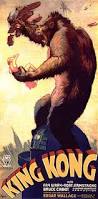 Another opening/title sequence we can analyse is "King Kong" (1933); please view this link and view the video: http://www.artofthetitle.com/title/king-kong/ . The opening is in black and white starting off with the 1930s logo of the film production and distribution company RKO Pictures. The title and text is hand-drawn and that the way it is drawn is like an illusion that shows the great size and shadows which fits with the mood of the musical score, auras of fear and greatness are conveyed as the title is shown. Notice how the text switches to other text as if an invisible spotlight is shooting above; as you view the title/opening sequence you can see that the names of the staff members involved with the development of the film is displayed first than the names of the actors and actress. An Arabian proverb is then displayed, which foreshadow, the narrative and tragedy that is to follow in the end of the film.
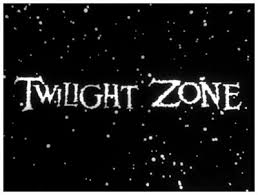 Finally we examine one of the many opening sequences of "The Twilight Zone" (1959). The narrator's monologue enchants and directly addresses the audience that the program they are viewing will transport them into a story and setting that is eerily similar to our reality but quite different which is supported by other images and objects. The title forms from the nothingness as the camera zooms in, the font is in capitals and appears to be designed to appear mysterious and foreboding; the music/theme used matches the black and white images appearing in the stygian void and stars as if transporting the viewers into a reality frighteningly new and exciting.
For the coursework piece, my partner and I must consider the presentation and fonts of the title for our coursework piece and how it can fit with the genre.
For the coursework piece, my partner and I must consider the presentation and fonts of the title for our coursework piece and how it can fit with the genre.
Sunday, 17 November 2013
Film Opening Research- MISE-EN-SCENE, Genre, and Conventions
Film Opening Research: Mise-En-Scene, Genre, and Conventions
Mise-En-Scene ,the image caught within the frame of the camera is important for this coursework piece and one of the most difficult task(s) to accomplish. The basics aspects of Mise-En-Scene includes: settings and props, costume hair and make up, positioning of characters/objects within a frame, lighting and colour, and finally facial expression and body language. In order to make this film opening work, we must also focus on the genre and its' conventions. Now the film opening for the coursework has been decided to be given the genre of horror and/or possibly its' sub-genres, therefore we must follow the conventions to have the mise-en-scene fit. Example: the image here is from the film "The Strangers" (2008), this scene takes place when the three intruders have captured two of the main characters. In this shot the audience are facing the back of the captives as the three strangers look down on them preparing to stab them over and over again; this puts the audience in the captive's perspective.Conventions are the recurring elements that appear in films and can vary depending on the genre. By applying the conventions of the horror film genre, my partner and I can better understand how to enhance the impact of mise-en-scene in our opening. The setting of a horror film could be applied to almost any location as long as the area has a dark history and typical horror themes are added e.g. the theme of isolation in the Overlook Hotel, the setting of "The Shining" (1980). The props in the frame or the props the characters interact with can convey what they truly are, stereotypically the villain of a slasher film would have a gruesomely intimidating weapon e.g. "The Texas Chainsaw Massacre" (1974) and the representation of a chainsaw as a weapon and tool for butchery.
Costumes, hair, and make-up can help identify the time period of the setting and location of the horror film as well as the characters' emotions and who they are. Such as the this image from Tim Burton's "Sweeney Todd: The Demon Barber of Fleet Street"(2007); with this lighting, dark colours, costumes, hair styles and buildings it projects the setting of a miserable 19th century London. Low-key lighting can be used to create a scene that isn't well lit and long dark shadows, useful in adding a sense of foreboding and danger. Colour conventions in a horror film seem to be recurring symbols, red for blood, black for darkness, etc. Facial and body expressions in a horror film can be depressing or simply casual until the threat/ villain is made known, characters' previous expressions and movement can vary depending on their role. As for the threats, they would appear as intimidating and fierce as possible but an unsettling calm expression is equally terrifying, physical movements of the threat are also variable depending on who or what they are. Another example: this shot is part of the opening sequence of "Zombieland" (2009), notice the terrified facial expression of the woman running away from the zombie. The zombie's facial expression is menacing and hungry, the movements of the zombies in this film or abnormally fast and awkward making it more creepy.
Unfortunately, through the years the narratives of the horror genre and its' sub-genres have become more and more predictable, a prime example would be "the slasher" sub-genre. The murderous villain (possibly a supernatural villain as well) is utterly insane because of past traumatic experiences or born insanely cruel. The villain slays stupid and morality-lacking adolescents one by one in sinister and gruesome ways for reasons depending on the scenario. Most of the time there will be a survivor who succeeds in stopping or escaping the malevolent force, most often female or 'final girl', a recurring cliché.
Characters are becoming repetitive in the horror genre, some either plot driven or character driven. The conventions include a protagonist (male or female) is the victim/hero of the conflict against the opposing villain and threat(s) which could be anything depending on its' sub-genre, a possible love interest. Secondary characters that have little or major importance through the course of the plot that may effect the protagonist and antagonist to certain degree(s). With this information, my partner and I can create a film opening that follows the conventions of the genre and possibly attempt to break some stereotypes.
Wednesday, 13 November 2013
Half-Term Assignment 1 (2 of 2)
Half-Term Assignment 1
Like the previous half, I will try to dissect the micro-codes from another media text, but rather from a segment of a television drama I'll try to analyse a short television advert of a videogame known as "Batman: Arkham Origins" (2013) . Please click this link to view: http://www.youtube.com/watch?v=48MBXU2cTq8
The narrative is basically showing how the fictitious character Bruce Wayne's' mission to become a crime-fighting avenger began early in his life, moulded from tragedy, honor, and will power; representing him as a tragic hero. These events are shown as a montage which shows time moving forward. After watching the link, you will notice that each jump cut shows a close-up/ tight frame of Bruce Wayne, showing the characters' importance and possibly to empathize with the character. Logos of the companies responsible for the creation and distribution of the game appear and disappear one at a time by gusts of snow, hinting the season and/or time of the setting.
At the 00:10 second mark the screen is black but at the 00:11 second mark, the non-diegetic sound of a piano is being played, the rhythm and the tune is melancholic. At the same time we see a boy positioned at the center and the camera is focused on him, from our view the mother is presumably at the left behind the boy and the father at the right behind the boy; judging by their costume and hair they are part of the high class. The facial expression of the boy is happy but in few seconds something catches his attention, with a flash of light and a bang you can see the boys emotions quickly changed from happiness, to concern at the sight of the unknown assailant, surprise at the gunfire, and a mix of shock and fear at the 00:15 to 00:16 second mark as his mothers grasp is released and her pearl necklace falls apart and a smoking gun shell falls, signifying death.
At the 00:17 second mark, there is a jump cut signaled by the sound of another gun shot but it isn't diegetic, the child is positioned at the center looking directly at the camera, same age yet further on in time and a different setting. The location is now a dreary, rainy day with people clad in black suits using their umbrellas, a funeral.
One individual is behind the boys' left and he has his hand on the boys' shoulder showing sympathy and connection between these two, the boys' skin is almost deathly pale (matches with the event) and his eyes denote misery yet no tears. Another jump cut occurs signaled by the gun shot, the boy is now an adolescent and is being bullied by two other adolescent males, judging by their matching uniforms these characters are in a private school of some sort, or rather outside one by looking at the unfocused background. He appears filthy, disheveled and bleeding but as one of the boys restrains the main guy from behind and the other is about to attack from the front, the main character is looking directly at the camera still and his eyes show no fear. Two other shots involve training, one is him being defeated in some form of martial arts, presumably by the uniform and his shaved head with little expression of pain. The next is one is quite different, just like the previous shot the main character was sparring and his face shows hardly any emotion, but in this one the lighting is darker and he's wearing peculiar armour as he spars with unknown individuals and the tip of a sword barely cuts him.
Finally at the 00:27 second mark the setting is in a dark urban area snowing down, still a direct close up shot of the same character as an adult but now as Batman. At the right side we see a fist approaching, throughout the entire advert the motions and movement has been similar to slow motion finally pulls up to speed when the fist at the right side punches Batman, the music stops and you can here hush distortion. Match on action editing has been used as the movement is continued and minor jump cuts of the villain pummeling Batman; as he staggers to his feet match on action editing is used again as the shot shows a medium close up shot of the villain laughing. The camera shot shifts back to a medium close up of Batman, his eyes denoting determination and fury; as he lunges the motion slows down again and fades to black. The melancholic music returns as the title merges from the dark and gusts of snow, a voice or lyric can be heard saying: "It's all still with me".
Those lyrics at the end of the advert possibly reflects on the character on how all the grief, training, and will power from the very beginning is still with him; to show that he intends to keep his promise to fulfill his goals.
The narrative is basically showing how the fictitious character Bruce Wayne's' mission to become a crime-fighting avenger began early in his life, moulded from tragedy, honor, and will power; representing him as a tragic hero. These events are shown as a montage which shows time moving forward. After watching the link, you will notice that each jump cut shows a close-up/ tight frame of Bruce Wayne, showing the characters' importance and possibly to empathize with the character. Logos of the companies responsible for the creation and distribution of the game appear and disappear one at a time by gusts of snow, hinting the season and/or time of the setting.
At the 00:10 second mark the screen is black but at the 00:11 second mark, the non-diegetic sound of a piano is being played, the rhythm and the tune is melancholic. At the same time we see a boy positioned at the center and the camera is focused on him, from our view the mother is presumably at the left behind the boy and the father at the right behind the boy; judging by their costume and hair they are part of the high class. The facial expression of the boy is happy but in few seconds something catches his attention, with a flash of light and a bang you can see the boys emotions quickly changed from happiness, to concern at the sight of the unknown assailant, surprise at the gunfire, and a mix of shock and fear at the 00:15 to 00:16 second mark as his mothers grasp is released and her pearl necklace falls apart and a smoking gun shell falls, signifying death.
At the 00:17 second mark, there is a jump cut signaled by the sound of another gun shot but it isn't diegetic, the child is positioned at the center looking directly at the camera, same age yet further on in time and a different setting. The location is now a dreary, rainy day with people clad in black suits using their umbrellas, a funeral.
One individual is behind the boys' left and he has his hand on the boys' shoulder showing sympathy and connection between these two, the boys' skin is almost deathly pale (matches with the event) and his eyes denote misery yet no tears. Another jump cut occurs signaled by the gun shot, the boy is now an adolescent and is being bullied by two other adolescent males, judging by their matching uniforms these characters are in a private school of some sort, or rather outside one by looking at the unfocused background. He appears filthy, disheveled and bleeding but as one of the boys restrains the main guy from behind and the other is about to attack from the front, the main character is looking directly at the camera still and his eyes show no fear. Two other shots involve training, one is him being defeated in some form of martial arts, presumably by the uniform and his shaved head with little expression of pain. The next is one is quite different, just like the previous shot the main character was sparring and his face shows hardly any emotion, but in this one the lighting is darker and he's wearing peculiar armour as he spars with unknown individuals and the tip of a sword barely cuts him.
Finally at the 00:27 second mark the setting is in a dark urban area snowing down, still a direct close up shot of the same character as an adult but now as Batman. At the right side we see a fist approaching, throughout the entire advert the motions and movement has been similar to slow motion finally pulls up to speed when the fist at the right side punches Batman, the music stops and you can here hush distortion. Match on action editing has been used as the movement is continued and minor jump cuts of the villain pummeling Batman; as he staggers to his feet match on action editing is used again as the shot shows a medium close up shot of the villain laughing. The camera shot shifts back to a medium close up of Batman, his eyes denoting determination and fury; as he lunges the motion slows down again and fades to black. The melancholic music returns as the title merges from the dark and gusts of snow, a voice or lyric can be heard saying: "It's all still with me".
Those lyrics at the end of the advert possibly reflects on the character on how all the grief, training, and will power from the very beginning is still with him; to show that he intends to keep his promise to fulfill his goals.
Film Opening Research-Sound
Film
Opening Research-Sound and Music
Contrapuntal Sound: The visual image and the music playing at the background contrast.
Parallel sound: When the visual image and the music playing at the background harmonise.
Another example of a film that uses contrapuntal sound would be Stanley Kubrick's "A Clockwork Orange" (1971); please view this link: http://www.youtube.com/watch?v=Z-zRtT5jPLA . In this scene the main character Alex and his 'droogs' or allies challenge a rival gang into a fight that takes places into a dark, abandoned theatre; the ensuing fight is displayed in a montage of violence. With the low-key lighting, grim atmosphere of urban decay and senseless violence we have an excerpt of "La gazza ladra" (The Thieving Magpie) composed by Gioacchino Rossini playing in the background. There is no connection to this musical piece and the film, it's unsettling to hear something so cheerful and whimsical associated with something so violent. I believe the only connection would be that they're associated with the theatrical; this piece of music was composed by Rossini was specifically made for an Italian melodramatic opera where as the scene of the film takes place in an abandoned and broken theater. Perhaps Rossini's music was used to echo the once lively and respectful location of the setting in the film, now fallen from it's glory as delinquents attack one another.
Tuesday, 5 November 2013
Half-Term Assignment 1 (1 of 2)
Half-Term Assignment 1
For this half-term assignment for Media Studies I will attempt to dissect the micro-codes that I can detect from the scene of a psychological thriller-drama known as "Hannibal" (2013). Please view this link: http://www.youtube.com/watch?v=4M1yA6A2fLE
Now after watching this link you can notice that there is no diegetic or non-diegetic sound playing besides the dialogue of the two characters presented, quite effective as there is a build up of tension and volume in the conversation. The viewer is 'all ears' to say, without any non-diegetic sound whether contrapuntal or fitting we are focusing on this private and serious dialogue. The lighting of the setting appears dim, not low-key lighting but dark to add a grim or weary atmosphere. Through the course of the conversation before the final few seconds you will notice that the camera shots are medium-close-ups of the characters and that they are shot-reverse-shots that allows some sense of being part of the conversation. Once the video reaches 00:38 seconds, a jump cut of a wide shot of the characters and setting appears allowing the continuity of the shots and conversation to flow. Through out the video, the 180 degree rule was not broken.
You will notice that in the course of these reverse shots of the characters that the character at the left (Jack Crawford) is focused on the character at the right (Will Graham) and the situation at hand, however we do know that Will is speaking directly to Jack but he isn't always making direct eye contact, giving the viewer the idea that Will isn't entirely focused, something is damaged within his character. Costume, hair slightly reflects on the attitudes of the characters, we can tell by Jacks' attire that he's involved in a serious and grim career involving in the capture of the villainous alongside with what few lines in the dialogue; Wills' appearance seems simple, fragile as if he may eventually break reflecting on how he argues with Jack, further showing Wills' deteriorating sanity.
Film Opening Research-Demographic
Film Opening Research-Demographic
A Demographic is a particular target audience/ population that can range from ages, sex, culture, ethnicity, the social classes, etc.
One other example would be "Se7en"or "Seven" (1995), where two homicide detectives who become greatly involved with the case of a sadistic, calculating killer who is modeling his murders after the Seven Deadly sins. The target audience yet again focuses adults, mainly middle class and males.
For the Coursework, another student and I intend to target an adolescent audience, about age 15 and up. To prepare/search for what our target audience desire in our film opening and genre, we have designed some questionnaires and have taken multiple samples.
Here is the design of the questionnaire I used:
4. Have you ever watched a Horror film or it's sub-genres?
5 What do you look for in a Horror film or
6. Why do you watch horror films?
7. What do you believe makes a horror film great?
8. When was the last time you watched a horror film?
9. Do you prefer to view a horror film alone or with other people?
10. What do you hope or expect from this Coursework Opening?
11. What type of villain, monstrosity, or any other atrocity are you interested in?
Sample 1: Age 16, Female, favorite genre is Sci-Fi, has indeed watched horror films and it's sub-genres; looks for a dark plot, jump scares, good-acting and no clichés in a horror film. Claims to watch horror films to sample a different genre, believes that a good plot and original twists/turns make a horror film great; most recently seen a horror film on 31st of October 2013, prefers watching with others, hopes for an attention- grabbing opening and prefers a chaotic villain with a twisted morale compass.
Sample 2: Age 16, Female, favorite genre is Action, doesn't enjoy horror films, searches for jump-scares and violence in a horror film. Has viewed a horror film by accident, believes a horror film that subverts from norms and clichés makes a horror film great, last viewed a horror film two months ago, watches with other people, expects conventions of horror in opening, and prefers a clever psychological villain.
Sample 3: Age 28, Male, favorite genres include Comedy, Drama, and Sci-Fi; has viewed horror films, and looks for suspense and gore in a horror film. Views horror films to be scared, believes suspense makes a horror film great, has last seen a horror film six months ago, prefers watching with other people, expects suspense and fear in the opening, final question was not answered.
Sample 4: Age 16, Male, favorite genre is Sci-Fi, has viewed horror films, searches for 'scares' in a horror film. Has viewed horror films because she enjoys the genre, believes the narrative and fear conveyed makes the film great, has viewed a horror film last month, enjoys viewing horror films with others, hope the opening has suspense, and prefers a villain that is psychologically deranged.
Sample 5: Age 16, Female, favorite genre is Fantasy, has viewed a Horror film and searches for a decent storyline with creepiness in a horror film. Watches horror films for amusement and frights, believes a horror film with a story and scares is great, viewed a horror film last month, prefers to watch a horror films with others, expects a gripping story with originality; and prefers the villains to be mutants, zombies, or paranormal.
Sample 6: Age 16, Male, favorite genre is Comedy, has viewed horror films, searches for "mental confusion" in a horror film. Watches horror films for the thrills, believes that the fear factor(s) within the film makes it great, has last seen a horror film four months ago; prefers to view horror films with friends, expects the film to entice him to watch the film, villain for horror film(s) that sample finds interesting are scary doctors.
Sample 7: Age 16, Female, third question was left unanswered, has watched horror films, searches for the psychological terror in a horror film. Watches horror films because often has viewed those well made, believes the coherency of the story makes a horror film great, has viewed a horror film last summer, prefers to view horror films with others, expects a protagonist struggling internally and externally, and finds a villain that is an unseen force interesting.
Sample 8: Age 17, Female, favorite genre is Action and Adventure, has viewed horror films most often psychological-thriller(s); searches for jump scares, tension and slick camera movement. Enjoys watching horror films because of the apprehension, believes jump scares make a horror film great, has last seen a horror film two weeks ago, prefers to watch with other people; tenth question was unanswered and finds a psychological villain interesting.
For the Coursework, another student and I intend to target an adolescent audience, about age 15 and up. To prepare/search for what our target audience desire in our film opening and genre, we have designed some questionnaires and have taken multiple samples.
Here is the design of the questionnaire I used:
Questionnaire for Media Studies AS Coursework
1. How old are you? Please write down:
2. Are you Male or Female? Please circle one (M/F)
3. What genre of film are you most fond of? Please write down: 4. Have you ever watched a Horror film or it's sub-genres?
5 What do you look for in a Horror film or
6. Why do you watch horror films?
7. What do you believe makes a horror film great?
8. When was the last time you watched a horror film?
9. Do you prefer to view a horror film alone or with other people?
10. What do you hope or expect from this Coursework Opening?
11. What type of villain, monstrosity, or any other atrocity are you interested in?
Sample 1: Age 16, Female, favorite genre is Sci-Fi, has indeed watched horror films and it's sub-genres; looks for a dark plot, jump scares, good-acting and no clichés in a horror film. Claims to watch horror films to sample a different genre, believes that a good plot and original twists/turns make a horror film great; most recently seen a horror film on 31st of October 2013, prefers watching with others, hopes for an attention- grabbing opening and prefers a chaotic villain with a twisted morale compass.
Sample 2: Age 16, Female, favorite genre is Action, doesn't enjoy horror films, searches for jump-scares and violence in a horror film. Has viewed a horror film by accident, believes a horror film that subverts from norms and clichés makes a horror film great, last viewed a horror film two months ago, watches with other people, expects conventions of horror in opening, and prefers a clever psychological villain.
Sample 3: Age 28, Male, favorite genres include Comedy, Drama, and Sci-Fi; has viewed horror films, and looks for suspense and gore in a horror film. Views horror films to be scared, believes suspense makes a horror film great, has last seen a horror film six months ago, prefers watching with other people, expects suspense and fear in the opening, final question was not answered.
Sample 4: Age 16, Male, favorite genre is Sci-Fi, has viewed horror films, searches for 'scares' in a horror film. Has viewed horror films because she enjoys the genre, believes the narrative and fear conveyed makes the film great, has viewed a horror film last month, enjoys viewing horror films with others, hope the opening has suspense, and prefers a villain that is psychologically deranged.
Sample 5: Age 16, Female, favorite genre is Fantasy, has viewed a Horror film and searches for a decent storyline with creepiness in a horror film. Watches horror films for amusement and frights, believes a horror film with a story and scares is great, viewed a horror film last month, prefers to watch a horror films with others, expects a gripping story with originality; and prefers the villains to be mutants, zombies, or paranormal.
Sample 6: Age 16, Male, favorite genre is Comedy, has viewed horror films, searches for "mental confusion" in a horror film. Watches horror films for the thrills, believes that the fear factor(s) within the film makes it great, has last seen a horror film four months ago; prefers to view horror films with friends, expects the film to entice him to watch the film, villain for horror film(s) that sample finds interesting are scary doctors.
Sample 7: Age 16, Female, third question was left unanswered, has watched horror films, searches for the psychological terror in a horror film. Watches horror films because often has viewed those well made, believes the coherency of the story makes a horror film great, has viewed a horror film last summer, prefers to view horror films with others, expects a protagonist struggling internally and externally, and finds a villain that is an unseen force interesting.
Sample 8: Age 17, Female, favorite genre is Action and Adventure, has viewed horror films most often psychological-thriller(s); searches for jump scares, tension and slick camera movement. Enjoys watching horror films because of the apprehension, believes jump scares make a horror film great, has last seen a horror film two weeks ago, prefers to watch with other people; tenth question was unanswered and finds a psychological villain interesting.
Wednesday, 23 October 2013
Commentary for Desperate Housewives Style Drama
Commentary for "Desperate Housewives" Style Drama
Opening begins with a 'Birds'-Eye-View'/Establishing Shot of an unnamed city skyline in black and white as colored onomatopoeia text make a rhythmic and catchy tune of the sounds, or a specific jazz song is playing while the colored onomatopoeia text still pops up now and again. The purpose of the shot(s) being black and white is so that specific colored objects that relate to the characters stand out. Note: Majority of shots are in black and white. The second shot is a wide shot of a bar (well-lit) as patrons (mostly men, middle class) are trying to have an enjoyable time as the camera slowly pans to the right. The purpose of having these men middle class and rowdy in this shot is to make these minor background characters relatable and to fit the stereotype that men can be irresponsible and amusement seeking. Aside from colored text of onomatopoeia still noticeable, one male person is colored or highlighted pink and the black and white sky turns blue and a multicolored rainbow can be seen without anyone taking notice. The reason for these bright colors on these objects is to convey one of my characters' sexual orientation in the story; although his clothing is quite similar to the background characters, his sexuality makes him stand out.
The third shot is a mid shot of a private study (well lit), the camera is positioned at the bottom right corner of the desk so we can clearly see the neatly place objects on the desk such as a computer, a family picture, etc. What becomes noticeable is that their is a smart looking suit and an emblem of a specific school colored in a dark blue, but their is also a bright blue apron which is reminiscent of a 1950's housewife apron hanging at the far top right with the suit. This is again hinting to one of my characters in the plot of this drama, a divorced husband who now not only takes on the role of being a working father but also juggles the tasks of his previous wife. The onomatopoeia sounds/words of a fire alarm activates as the camera zooms in on an opening door.
The fourth shot is in a familiar yet different area, a fixed/stationary camera angle of a man sitting on a sofa, watching television or presumably ignoring his wife and five noisy children amongst the chaotic noise and filthy surroundings of toys and bills in this almost-dimly-lit-room. The audience should notice that a police officers cap and a fire arm is lying on the floor, this would intended to hint that even though this man has a position of authority in society, he lacks authority and the responsibility which comes with it in his own home.
The camera is no longer stationary and turns a 90 degree angle of where the man is sitting into a POV and then zooms in amongst the static of the television screen which finally becomes the fourth shot, a mid-shot-birds'-eye-view of a poorly lit room. Here we can see a man sleeping over his desk which is cluttered with artistic materials bottles of wine colored in red (empty or not), lady magazines but their clothing and make-up revolving around the color palette of red and finally a piece of artwork of a split bleeding heart in red. The disorganized work desk could reflect on the person and his life, the stereotype of men and alcohol can be seen by the highlighted wine bottles as well as the idea of men being sleazy and desiring women materialistically or lustfully can be shown by the magazines. But with the color of red being known for symbolizing strength, passions and so on clearly being shown here, the main focus is the severed heart painting symbolizing the character here is missing something meaningful. The character himself sleeping over the desk has disheveled clothing, and appears that he wept a great deal.
The camera then zooms in to the painting until the only thing that can be seen is the color red, the camera pans out from the red to a new shot, a red button, as the camera continues to pan out we see that the red button is one of the eyes of a sad stuffed rabbit toy on a table located the left side. The only source of light is from a distant open room at the top right of the shot, time appears to pass as the walls peel, dust collects, the rabbit now has a red blood stain on the now-blue-button, the onomatopoeia is that of arguing parents, weeping, sounds of punching. The sounds grow louder, distorted, the camera zooms in to the bright room, almost going beyond and finally silence; the title soon appears in bold and black as a colored setting finally emerges from the brightness, the street where our characters reside.
The third shot is a mid shot of a private study (well lit), the camera is positioned at the bottom right corner of the desk so we can clearly see the neatly place objects on the desk such as a computer, a family picture, etc. What becomes noticeable is that their is a smart looking suit and an emblem of a specific school colored in a dark blue, but their is also a bright blue apron which is reminiscent of a 1950's housewife apron hanging at the far top right with the suit. This is again hinting to one of my characters in the plot of this drama, a divorced husband who now not only takes on the role of being a working father but also juggles the tasks of his previous wife. The onomatopoeia sounds/words of a fire alarm activates as the camera zooms in on an opening door.
The fourth shot is in a familiar yet different area, a fixed/stationary camera angle of a man sitting on a sofa, watching television or presumably ignoring his wife and five noisy children amongst the chaotic noise and filthy surroundings of toys and bills in this almost-dimly-lit-room. The audience should notice that a police officers cap and a fire arm is lying on the floor, this would intended to hint that even though this man has a position of authority in society, he lacks authority and the responsibility which comes with it in his own home.
The camera is no longer stationary and turns a 90 degree angle of where the man is sitting into a POV and then zooms in amongst the static of the television screen which finally becomes the fourth shot, a mid-shot-birds'-eye-view of a poorly lit room. Here we can see a man sleeping over his desk which is cluttered with artistic materials bottles of wine colored in red (empty or not), lady magazines but their clothing and make-up revolving around the color palette of red and finally a piece of artwork of a split bleeding heart in red. The disorganized work desk could reflect on the person and his life, the stereotype of men and alcohol can be seen by the highlighted wine bottles as well as the idea of men being sleazy and desiring women materialistically or lustfully can be shown by the magazines. But with the color of red being known for symbolizing strength, passions and so on clearly being shown here, the main focus is the severed heart painting symbolizing the character here is missing something meaningful. The character himself sleeping over the desk has disheveled clothing, and appears that he wept a great deal.
The camera then zooms in to the painting until the only thing that can be seen is the color red, the camera pans out from the red to a new shot, a red button, as the camera continues to pan out we see that the red button is one of the eyes of a sad stuffed rabbit toy on a table located the left side. The only source of light is from a distant open room at the top right of the shot, time appears to pass as the walls peel, dust collects, the rabbit now has a red blood stain on the now-blue-button, the onomatopoeia is that of arguing parents, weeping, sounds of punching. The sounds grow louder, distorted, the camera zooms in to the bright room, almost going beyond and finally silence; the title soon appears in bold and black as a colored setting finally emerges from the brightness, the street where our characters reside.
Tuesday, 1 October 2013
Evaluation of Media Film(s)
Evaluation of Media Film(s)
1. In what ways does your media product use, develop or challenge forms and conventions of real media products ?
Dialogue used in our short-film " Depression and Baby Steaks" starts as an internal monologue to explain the character's thoughts and used as exposition; in between the film dialogue becomes a conversation/interview between the two characters, aside from the minimal tension the dialogue is civil until one line conveys to the audience that there is something sinister. Camera shots such as the 180 degree rule, match on action, and over the shoulder have proven useful such as introducing characters, focusing on through the perspective of characters, etc. Mise-en- scene was used in this short film but not to a high extent such as the lack of appropriate costumes, setting of area was not convincing, no use of symbolism, minimal prop usage such as handcuffs work binder/files, and the soundtrack was the theme from the film "One Flew Over The Cuckoo's Nest (1975) ".
2. How does your media product represent particular social groups ?
Two social groups portrayed in this short film are the mentally ill/ anti-social people and a middle-to-high-class physician/psychiatrist. The "Physician" social group is represented as a slightly difficult to read, calm, and hopeful person who believes he can cure his patient of his burdens/madness. The "Mentally Ill" social group is represented in a negative outlook, although not all people with mental illness are not harmful beings, the representation in this short-film is a criminal, difficult to read, and hostile.
3. What kind of media institution might distribute your media product and why ?
I think that a film or a television media institutions such as Universal or ITV might be suitable media institutions that would distribute this media product; however it is a short-film so it could end up in a media institution like YouTube.
4. Who would be the media audience for your media product ?
The short film I made with another student is called "Depression and Baby Steaks", a quick story of how a psychiatrist believes he can cure a seemingly harmless mad man, I believe it would be best to show adolescents and older.
5. How did you attract/address the audience ?
The audience isn't directly addressed to, however they are indirectly addressed to by one of the character's monologues to provide a quick background of the second character and the first characters' thoughts. Attracting the audiences' attention in my opinion was difficult, odd/simple character names, minor tension in a civil conversation, and finally reaches the sentence that shows the audience that the main character's belief in helping the second character may be futile.
7. Looking back at your preliminary task, what do you feel you have learnt in the progression from it to the full product ?
I've learnt how to create a storyboard and script and that major improvements are needed and that the management of a camera and editing the short film must be learnt thoroughly before the next project if I want the assignment to succeed.
Two social groups portrayed in this short film are the mentally ill/ anti-social people and a middle-to-high-class physician/psychiatrist. The "Physician" social group is represented as a slightly difficult to read, calm, and hopeful person who believes he can cure his patient of his burdens/madness. The "Mentally Ill" social group is represented in a negative outlook, although not all people with mental illness are not harmful beings, the representation in this short-film is a criminal, difficult to read, and hostile.
3. What kind of media institution might distribute your media product and why ?
I think that a film or a television media institutions such as Universal or ITV might be suitable media institutions that would distribute this media product; however it is a short-film so it could end up in a media institution like YouTube.
4. Who would be the media audience for your media product ?
The short film I made with another student is called "Depression and Baby Steaks", a quick story of how a psychiatrist believes he can cure a seemingly harmless mad man, I believe it would be best to show adolescents and older.
5. How did you attract/address the audience ?
The audience isn't directly addressed to, however they are indirectly addressed to by one of the character's monologues to provide a quick background of the second character and the first characters' thoughts. Attracting the audiences' attention in my opinion was difficult, odd/simple character names, minor tension in a civil conversation, and finally reaches the sentence that shows the audience that the main character's belief in helping the second character may be futile.
7. Looking back at your preliminary task, what do you feel you have learnt in the progression from it to the full product ?
I've learnt how to create a storyboard and script and that major improvements are needed and that the management of a camera and editing the short film must be learnt thoroughly before the next project if I want the assignment to succeed.
A Beginner's Guide to Mise-En-Scene.
A Beginner's Guide to Mise-En-Scene.
Mise-En-Scene is a French term which translated in to English means: "what is put into a scene or frame"; it is the visual information caught in front of the camera which communicates to the audience. There are five basic elements of Mise-En-Scene.
1.Settings and Props
Settings are either designed or a suitable location which already exists is chosen over time. Settings can reflect or enhance the character's mood and manipulate the audience by building up their expectations and gradually or suddenly take a different turn for the best or worst.
2.Costume, Hair, and Make-Up
These three show where and when the setting of the TV show/Film is and the culture or society it focuses on. It also partially or fully conveys the characters' personality, their job, purpose, status, etc.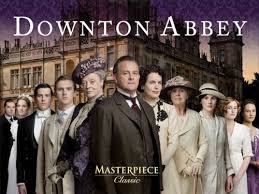
3.Positioning of Characters/Objects within a frame
A director can use positioning to indicate relationships between the characters and draw our attention to them, their setting and the props/objects.
4.Lighting and Colour
In Mise-En-Scene, lighting and colour has many uses such as making them look mysterious by shading the face or the body, to highlight important characters or objects within a frame, or to reflect the physical/mental state/hidden emotions( such as red=passion, blue=illusion, black=darkness, etc.)
5. Facial Expressions and Body Languages
Facial expressions can reflect how a character may be feeling. Their body language can also indicate how a character feels toward other characters and his/her relationship and the character himself/herself.
Subscribe to:
Posts (Atom)